Rites of Passage for Fathers and Sons
A meaningful rite of passage for a son is not theatre or a single grand event. It is a clear threshold, a shared challenge, honest words, and a relationship that continues after the day.
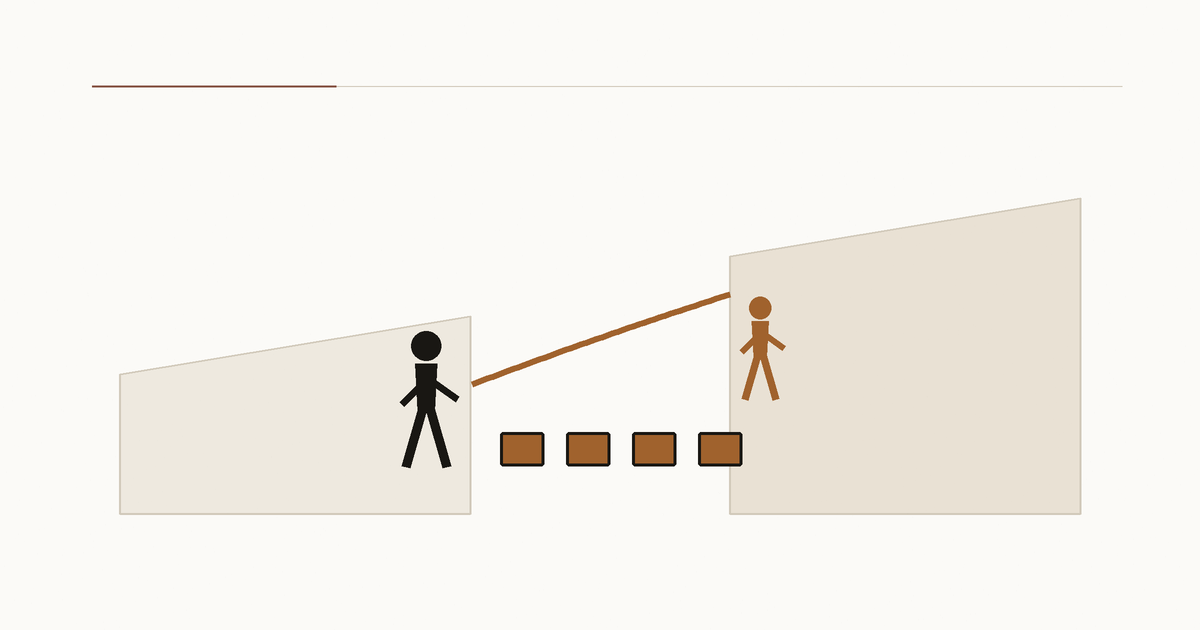
What makes a meaningful rite of passage for fathers and sons? Name a real new responsibility, share a proportionate challenge, speak honestly about character and support, and create a return point afterwards. The event matters less than the relationship and practice it begins.
Fathers often feel the absence of a clear passage into adulthood and reach for something dramatic: a wilderness weekend, a speech, a symbolic object, a carefully staged test. There is nothing wrong with ceremony. But a rite of passage becomes hollow when the event is asked to do the work of a relationship.
A passage is not proved by how cinematic the day feels. It is proved by what the father and son practise afterwards.
Start with a real threshold
A useful rite names a transition that already exists: more responsibility at home, a first job, leaving school, learning to drive, becoming accountable for time, money or a commitment to others. Do not invent danger or hardship for its own sake. The challenge should be proportionate, safe and connected to the responsibility being offered.
For a younger son, that may mean taking ownership of one household task and learning that his contribution affects others. For an older son, it may mean planning a trip, working alongside you on a practical project, or having a direct conversation about money, relationships, sexuality, work and character. The task is not to make him tough. It is to make the next responsibility visible and supported.
Give words, not a lecture
A father should say what he sees: the strengths he trusts, the habits that will matter, the mistakes he hopes his son can avoid without pretending he will avoid all of them. Speak as a human being, not an authority delivering a final verdict. A son needs room to disagree, ask questions and become someone other than his father.
It can help to write a letter. Include what you admire, what you struggled with at his age, what you want him to know about courage and what you will always help him carry. This is not a contract of obedience. It is evidence that the relationship has a language for the hard things.
Make the ceremony part of a pattern
Choose one shared challenge, one meal or walk without phones, and one concrete commitment the son carries forward. Then create a return point: a monthly check-in, a yearly trip, a standing project, or a conversation at the next threshold. A rite without follow-through is a memory; a repeated relationship is a structure.
Be careful not to turn masculinity into a narrow costume. A son does not need to earn love by becoming physically fearless, emotionally silent, competitive or like you. The passage is into greater responsibility and freedom, not into a role he did not choose. If your child is not a son, the same principles apply: clear responsibility, honest words, shared time and a reliable return.
The Father Presence rite is a practical starting point: daily attention, a weekly ritual, fast repair and a letter to your child. Begin with the relationship you have this week; the 7-Day Rite can hold the first promise.
Your life does not need another insight. It needs a threshold.
Join the waitlist for future Nine Rites pilot updates. No programme is currently open for enrolment.
Join the waitlist →Not ready? Start with the free 7-Day Practice.
Fatherhood specifically? Take the 3-minute Fatherhood Drift Test.