The Good Enough Father: Presence, Boundaries and Repair Without Perfection
A good-enough father is reliably reachable, firm without withdrawing love, able to repair his excess, and willing to let his child become someone he did not design.
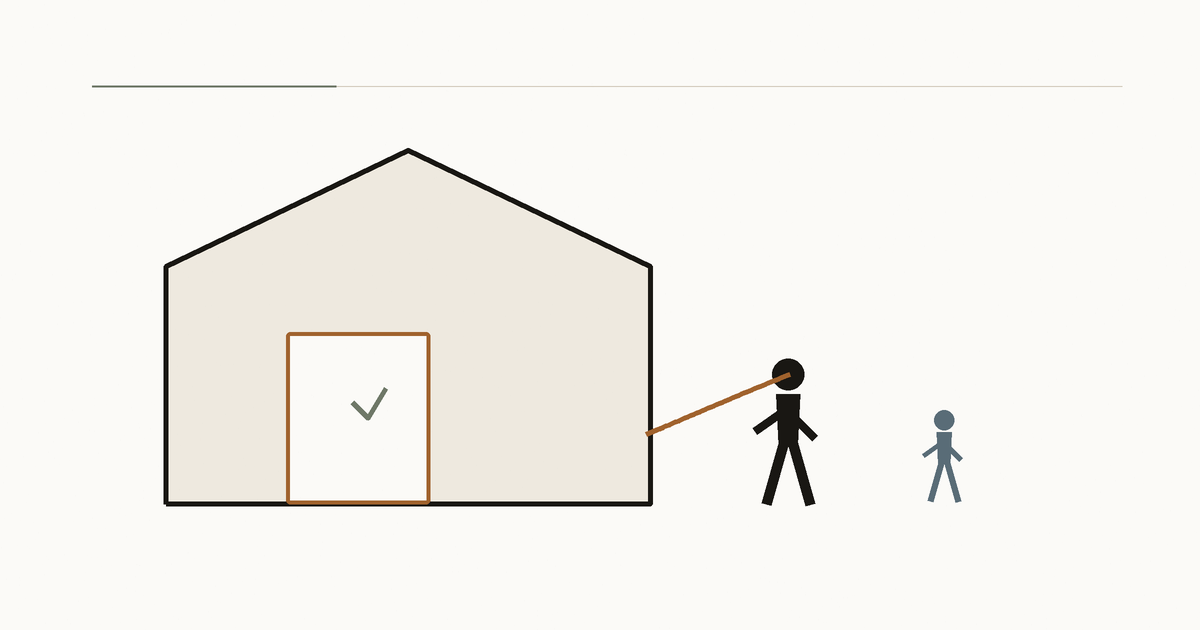
What does a child need from a father? Not perfection, but a reliable pattern: someone who notices, holds limits without withdrawing love, repairs his excess and lets the child become a separate person. Good enough means reliability, calibration and repair across time.
Perfection sounds like a high standard for fatherhood. Often it is a way of keeping the father at the centre.
Did I say the right thing? Did I create the perfect childhood? Do my children admire me?
A child needs something less theatrical and more demanding. They need a pattern they can use: someone usually notices, someone returns, a limit does not end belonging, a mistake can be named, and a promise means something.
This is the good-enough father. “Good enough” does not excuse indifference. It replaces the fantasy of flawless performance with the harder disciplines of reliability, calibration and repair.
Donald Winnicott developed “good enough” in relation to early maternal care: close adaptation followed by gradual, tolerable failure as the infant's capacity grows. Good-enough father is a Nine Rites adaptation of that developmental principle, not Winnicott's own named model. It asks what reliable, calibrated care looks like when carried by a father or father figure.
Presence is a function, not a location
A father can live in the house and remain difficult to reach. He can fund the family, attend the match and still train his children to check his mood before speaking.
Useful presence has two movements.
The first is safe haven: when the child is frightened, hurt or overwhelmed, can they return without being mocked, interrogated or told to toughen up?
The second is secure base: when the child wants to explore, attempt and fail, can they move away without having to protect the father's ego?
Attachment researchers John Bowlby and Mary Ainsworth used these ideas to describe how dependable care supports both return and exploration. The practical test is plain: notice, read and respond. Not perfectly, and not to every request, but accurately enough and often enough that the relationship remains usable.
This is why presence cannot be reduced to hours. Fifteen undistracted minutes may do more relational work than an afternoon spent beside a father who is somewhere else.
Challenge needs a safe return
Children need frustration. They need to lose, wait, contribute, hear no and discover that effort does not guarantee the result.
The question is not whether to challenge them. It is whether the challenge is calibrated.
Before increasing the demand, ask:
- Has this child shown capacity near this level?
- What are fatigue, hunger, illness, grief or overload doing to that capacity today?
- Is the consequence connected to what happened?
- Can I hold the line without shame, threat or public exposure?
- What makes recovery and return possible?
- Is this for the child's growth, or am I discharging fear, impatience or image management?
Challenge without continued relationship can become abandonment. Warmth without necessary limits can leave the child carrying decisions an adult should hold.
Good-enough fatherhood contains both.
Authority does not require dominance
A father has real authority because he carries responsibility for safety, structure and development. That authority is not a licence to be unquestionable.
Healthy authority is proportionate, explainable and temporary. It decides what the child cannot yet safely decide, then transfers responsibility as capacity grows. It accepts that disagreement is not treason and that a child may understand the reason without liking the answer.
A useful boundary has four parts:
- Contact: I see what is happening.
- Limit: I will not let you hit, drive tonight or use that account.
- Meaning: one brief reason appropriate to the child's age and capacity.
- Continued relationship: you can be angry; I am still here.
Connection before correction does not mean connection instead of correction. It means the correction arrives through a relationship the child can still use.
Repair is part of authority
Every father will bring the wrong tone home, miss a bid, overreact or defend himself when he should listen.
The rupture is not the whole story. What happens next teaches the child whether power can be accountable.
A clean parental repair:
- names what the father did;
- names the likely impact without dictating the child's feelings;
- says it was not the child's job to cause or manage the adult's behaviour;
- apologises without defence;
- states what will change;
- allows a response without demanding reassurance;
- proves the sentence through conduct.
Try:
I shouted and frightened you. Being frustrated did not make that acceptable, and it was not your job to calm me down. I am sorry. Next time I will step away before I speak. You do not have to tell me it is fine.
An apology that recruits the child to comfort the father is another burden. An apology repeated without a guardrail is a performance.
Changed conduct is the proof.
The child is not the father's unfinished life
Love includes plans. Fathers arrange schools, lessons, routines, savings and opportunities. Planning becomes possession when the child exists to complete the father's identity.
The warning signs are familiar:
- the child's success regulates the father's self-worth;
- interest receives warmth while refusal receives distance;
- the goal was chosen before the child could want it and never becomes genuinely revisable;
- ordinary family life bends around performance;
- failure feels like disloyalty;
- the father knows the metrics better than the person.
Philosopher Martin Buber distinguished relation to a person from relation to an object. Parenting necessarily contains management: calendars, decisions, measurements and protection. It fails when the child is only managed.
Erich Fromm's account of love adds the practical standard: care, responsibility, respect and knowledge. Respect means the child's life remains their own. Knowledge means attending to the actual child rather than the imagined one.
Nurture the child in front of you, not the imaginary child you drafted in your head.
This does not require fathers to abandon standards or ambition. It requires a transfer of ownership. A father can provide scaffolding, but the structure must increasingly answer to the child's interest, capacity and consent.
A weekly fatherhood test
Once a week, ask:
- What did my child approach me for?
- What might they be hiding because of how I react?
- Did I answer a bid for connection or name when I would return?
- Did I keep my word or renegotiate it before the breach?
- Did I hold a necessary boundary without humiliation?
- Did I challenge a demonstrated capacity or an imagined future?
- Could my child disappoint me this week without losing warmth?
- What needs repair, and what behaviour will prove it?
Do not ask the child to score you. Their role is not to become the witness for your self-improvement programme.
Use modest evidence instead: a protected ritual completed, a device put away, a promise kept, a repair attempted, a recurring reaction reduced.
The standard
The good-enough father will not give his child a life without frustration, conflict or paternal failure.
He offers something sturdier:
a relationship that can carry truth, limits, disappointment, ambition, separateness and return.
Source boundary
The architecture matters because these sources do different jobs.
- Winnicott supplies good-enough adaptation, tolerable frustration, play and the child's emerging spontaneity.
- John Bowlby and Mary Ainsworth supply the attachment functions of safe haven and secure base, plus the observable discipline of noticing, interpreting and responding to signals.
- Jennifer Kolari supplies a practitioner framework for connecting and calming before teaching. It informs the moment-to-moment language here but is not presented as the origin of attachment theory or as proof of a universal sequence.
- John and Julie Gottman's relationship research supports the importance of repair attempts in close relationships. It does not establish the seven-part parental apology above or the 24-hour rule; those are Nine Rites synthesis, bounded by the child's safety and agency.
- The calibration questions, boundary sequence, weekly test and father-specific framing are Nine Rites synthesis from the wider canon. They are not attributed wholesale to any one researcher.
For the practical structure, use the Father Presence Rite. For the specific risk of turning ambition into possession, read When Your Child Becomes Your Project.
Safety boundary: ordinary parental imperfection is not the same as abuse, neglect or coercive control. Violence, credible threats, persistent fear, self-harm, severe substance use or repeated dysregulation the family cannot safely contain require appropriate professional or safeguarding support. Nine Rites is educational practice, not diagnosis or treatment.
Your life does not need another insight. It needs a threshold.
Join the waitlist for future Nine Rites pilot updates. No programme is currently open for enrolment.
Join the waitlist →Not ready? Start with the free 7-Day Practice.
Fatherhood specifically? Take the 3-minute Fatherhood Drift Test.