A Father's Job Is to Become Less Central
The aim of fathering is not to stay necessary. It is to transfer capability steadily, so your child needs you less each year and chooses you anyway.
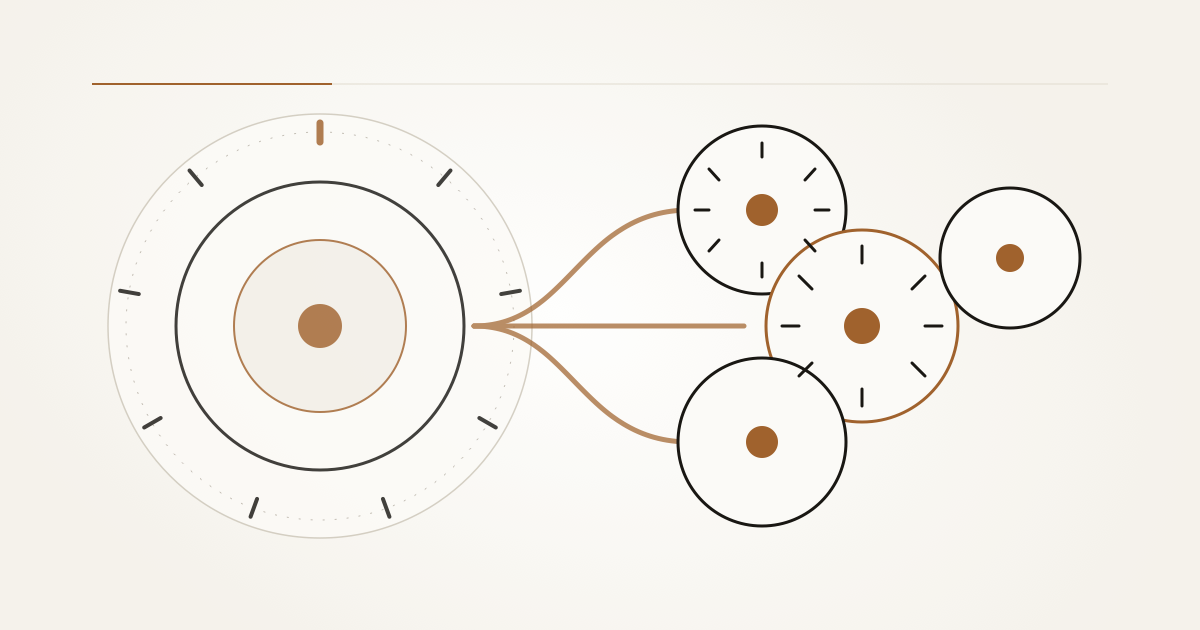
What is a father actually building? A person who does not need him. Transfer decisions, money, risk and conflict on a schedule, not a feeling. The test each year: can they now do something without you, and do they still come anyway?
There is a flattering version of fatherhood in which you remain the answer.
The one who knows how it works, who fixes it, who is called first. It feels like love and it photographs like competence, and it can quietly become the thing that stops a child growing up.
The measure of the job is not how much your child needs you at fifteen. It is what remains at thirty, when needing you is optional.
Two kinds of being needed
Dependence is being needed because the child cannot yet do it. It is appropriate, temporary, and shrinking by design.
Relationship is being chosen by someone who could manage without you. It is not temporary, and it cannot be manufactured.
The error is treating the first as evidence of the second. A father who keeps his children dependent will feel needed for a long time and will not know, until much later, whether he was ever chosen.
Richard Reeves has written about how much of the modern paternal role has to be actively constructed rather than assumed, particularly where the older provider script no longer carries it. bell hooks argued that men are frequently trained to express care through provision and control rather than emotional availability, which leaves indispensability as the most available form of love a man knows how to offer. Both point at the same trap from different sides: the father is doing something real, and it is not the thing he thinks it is.
Release is a schedule, not a feeling
Most fathers agree with the principle and then never act on it, because nothing forces the issue. The child gets older; the arrangements do not change.
Treat release as an actual transfer with dates on it. Four things move across, roughly in this order.
Decisions. Start with reversible ones, early. What they wear, how they spend a small budget, how they use an afternoon. The point is not the decision, it is the practice of living with a result you produced.
Money. Give an amount and stop managing it. A budget you administer teaches nothing except that you administer budgets. The first exhausted, badly spent allowance is the lesson, and it is cheap at that age.
Risk. Physical and social. The walk alone, the phone call to the shop, the trip without you, the failure in front of others. Each one transfers a piece of the belief that they can handle the world without you standing behind them.
Conflict. This is the one men hold longest. Let them disagree with you directly, hold the position under pressure, and occasionally win. A child who has never successfully disagreed with their father has not learned to disagree; they have learned to wait.
The three things men hold too long
The answer. You know how to do it and can explain it in twenty seconds. Explaining it is faster, and it removes the one process that actually builds capability, which is them working it out badly first.
The fix. Something breaks, you repair it before it is noticed. What gets transferred is not the repair skill but a model of the world in which problems are solved by someone else, offstage.
The standard. Your way of doing it is genuinely competent, and it becomes the only permitted way. This is the most likely to be defended as high expectations, and the most likely to produce a competent adult who cannot act without checking.
Each one is a small kindness. In aggregate they are a father keeping himself at the centre.
What you are actually transferring
Not tasks. Judgement.
The ability to assess something without you, to be wrong and recover, to ask for help without shame, and to hold a position you have thought about even when you are the one disagreeing with it.
That last one is uncomfortable to build deliberately, because a child who can disagree with their father will do it, and often about you. That is the evidence that it worked.
The test
Two questions, asked about any given year.
Can they now do something without you that they needed you for last year? If nothing has moved, nothing was transferred, whatever else the year contained.
Do they still come? Capability without contact means you released and withdrew. Contact without capability means you kept them close by keeping them small. The aim is both: increasingly able, and still choosing you.
Presence and release are not opposites. Presence is what makes release survivable, for them and for you. The practice for the first half is Father Presence; this piece is the second half, and it runs on a longer clock.
You are building a person who does not need you. If you have done it well, they will want you anyway, and that is the only version worth having.
Safety boundary. Release is age-appropriate transfer of capability and decision-making, not withdrawal of supervision, protection or care. Children and adolescents need boundaries, oversight and a father who remains reachable. This is not guidance for situations involving risk of harm, and Nine Rites is not therapy and does not replace professional help.
Your life does not need another insight. It needs a threshold.
Join the waitlist for future Nine Rites pilot updates. No programme is currently open for enrolment.
Join the waitlist →Not ready? Start with the free 7-Day Practice.
Fatherhood specifically? Take the 3-minute Fatherhood Drift Test.