Space Without Return Is Withdrawal
Taking space during conflict is legitimate. Taking it without stating when you will return turns a pause into an absence the other person never agreed to.
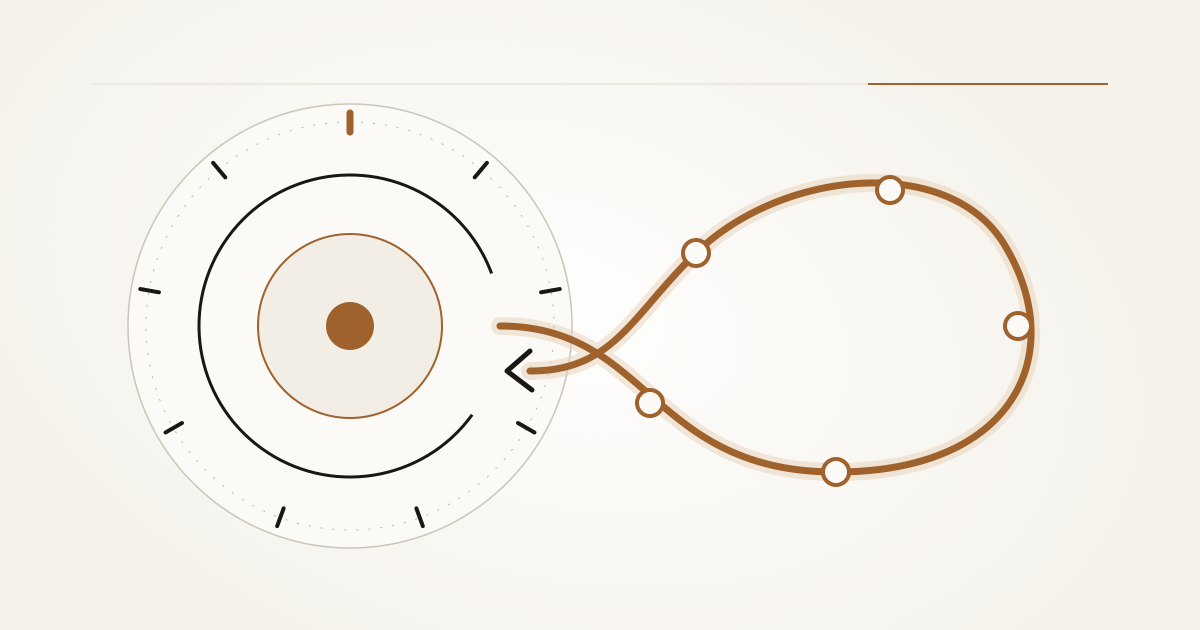
When does taking space become withdrawal? The moment it has no stated return. A boundary announces its terms: how heated you are, how long you need, and the time you will come back to the same subject. Without those, the other person is handed a clock with no numbers.
Men are told, correctly, to take space when a conversation turns hot.
The advice is sound and incomplete. It describes the leaving and says nothing about the returning, which is the half that decides what the leaving meant.
A pause with a stated return is a boundary. The same silence with no stated return is a withdrawal, and withdrawal is a decision about the relationship that only one person made.
A boundary states terms
A boundary is a limit you announce and then keep. It is legible from the outside. The other person can plan around it, disagree with it, or hold you to it.
Compare two versions of the same twenty minutes away from the room.
The first: you stop talking, walk out, and reappear later without reference to what happened.
The second: I am too heated to do this well. I need half an hour. I will come back at nine and we finish it. Then you come back at nine.
The physical distance is identical. What differs is that the second version leaves the other person holding information instead of a question.
The silent clock
When you leave without terms, the other person is handed a clock with no numbers on it.
They do not know whether this is twenty minutes or three days. They do not know whether the subject is paused or closed. They do not know whether they should approach you or leave you alone, and either choice can be wrong.
So they manage your absence. They read your face when you re-enter the room. They test the temperature with a small remark. They decide, often, that raising it again is more expensive than dropping it.
That is the real cost. Not the argument you avoided, but the arguments they stop starting.
Regulation is real; silence is not the regulation
The physiological case for stepping away is genuine. John Gottman's research describes flooding, the state in which heart rate climbs, the capacity to take in new information collapses, and the conversation stops being a conversation. Continuing to talk in that state does not resolve anything; it produces material you will later have to apologise for.
The same body of work identifies stonewalling, the shutting down of engagement, as one of the reliably corrosive patterns in a relationship, and notes that it is more commonly the man's move.
Both things are true at once. Stepping away can be the responsible act, and the same step becomes corrosive when it has no return attached. The regulation is what happens during the pause. The return is what makes the pause a pause.
What a stated return sounds like
Three sentences do the work.
Name your state, without making it her fault: I am too heated to be useful right now.
Name the duration, specifically: I need thirty minutes. Not "a while", not "some space".
Name the return, and be exact: I will come back at nine and we finish this.
Then come back at nine. If you need longer, say so before the deadline passes rather than after. A missed return is a broken promise, and it teaches faster than any apology.
Three tests
Whether a given absence was a boundary or a withdrawal is answerable, and not by how it felt to you.
Did you say how long? An unbounded absence is not a boundary.
Did you come back when you said? The return is the promise; the leaving was only notice.
Did you come back to the same subject? Returning warm but silent on the topic is avoidance with better manners. The subject is what she was left holding.
A man can pass the first two and still fail the third, and the third is where most of the damage sits.
Space is not the only tool, and not always the right one
Some conversations do not need distance. They need you to stay in the chair, tolerate discomfort, and let the other person finish.
The honest question before leaving the room is whether you are regulating or escaping. Regulation has a return time attached and a subject to come back to. Escape has neither, and tends to arrive dressed as regulation because that language is now available to everyone.
If you are unsure which one you are doing, the test is simple: do you know, before you walk out, what time you are coming back?
Safety boundary. This describes ordinary conflict between two people who both want the relationship to work. It is not guidance for abuse, coercive control, intimidation or fear for your safety or anyone else's. Leaving without terms, and without warning, is sometimes the correct and necessary act; in those situations the priority is safety and qualified support, not conversational technique. Nine Rites is not therapy and does not replace professional help.
Your life does not need another insight. It needs a threshold.
Join the waitlist for future Nine Rites pilot updates. No programme is currently open for enrolment.
Join the waitlist →Not ready? Start with the free 7-Day Practice.